The Small Business Guide to Investing in Marketing (And Why It Pays You Back)
A message from our Founder, Emily GF!
I'll say the thing most marketing agencies won't say out loud: I understand why you haven't invested in marketing yet.
You started your business because you're good at something not because you dreamed of writing social captions or untangling SEO. Marketing can feel like a luxury you'll "get to" once things slow down. And if you're anything like most of the small business owners I work with, things never really do.
Here's what I want you to know, though, marketing isn't the reward for growth. It's the reason growth happens at all. And the businesses winning right now aren't necessarily the ones with the biggest budgets, they're the ones who decided to show up consistently while their competitors waited for "someday."
Let's talk about why that matters, and what it actually looks like to invest in marketing without digging yourself into a hole.
"If I Build It, They Will Come" Is a Myth
I hear a version of this all the time: "I have a great product/service. Once people find out about it, they'll buy." The problem is the finding out part. A great business that nobody knows about is functionally invisible. And a great idea, doesn’t always translate into a great business (i.e. one that makes you a meaningful profit).
Today, the vast majority of buying decisions start online, even when the purchase happens in person. Consumers research a local business before ever walking through the door checking reviews, browsing a website, scanning social media, and what they find in those few minutes often decides whether they show up at all. Google and a business's own website are consistently the two most trusted sources people turn to when deciding whether to trust a local business.
That means your website and your online presence aren't a nice-to-have brochure. They're doing the work of a salesperson before you ever say a word to the customer.
What It Actually Costs You to Skip It
I'm not going to pretend marketing is free. But skipping it isn't free either; it's just a cost you don't see on a spreadsheet.
It shows up as the customer who almost called you, then chose the business with the better Google listing instead. It shows up as the slow season that didn't have to be quite so slow. It shows up as referrals that fizzle because the person you were referred to couldn't find enough information online to feel confident reaching out.
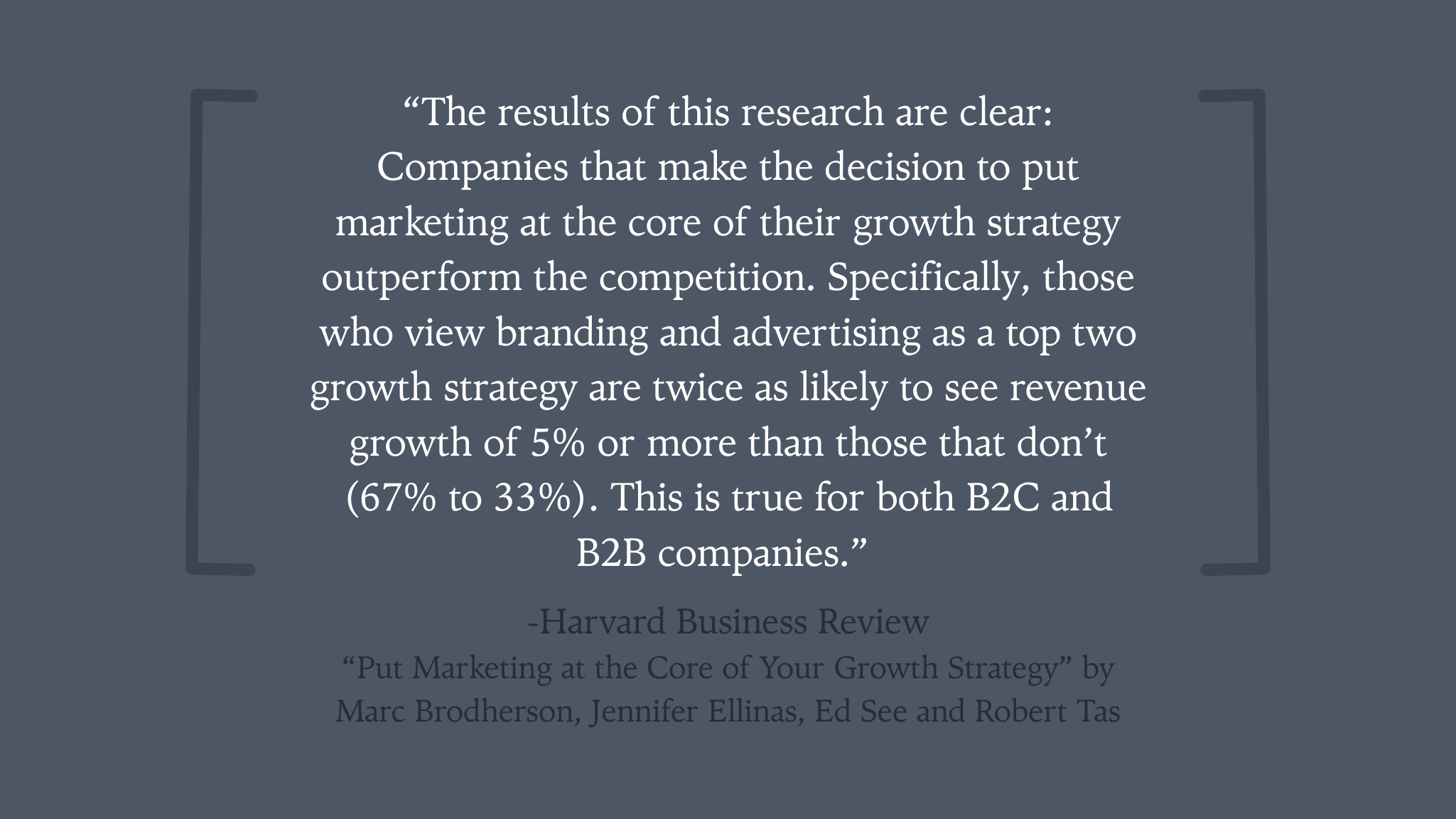
Research published in Harvard Business Review (2024), drawing on McKinsey & Company's analysis, found that companies whose CEOs put marketing at the center of their growth strategy were twice as likely as their peers to achieve annual revenue growth above 5%. The differentiator wasn't budget size, it was whether marketing was treated as core to growth or as an afterthought.
So... How Much Should You Actually Spend?
This is the question I get most, and the honest answer is: less than you fear, but more than $0.
For context, Gartner's 2025 CMO Spend Survey published in Business Wire, found that marketing budgets average 7.7% of company revenue; and that's mostly among large companies with established brand recognition. Small businesses starting from scratch typically need to invest more, not less, to get noticed at all.
You need a plan that's intentional instead of accidental: a website that actually represents you, a consistent (even if small) social presence, and a system for staying in front of past customers. Marketing done in small, consistent doses almost always outperforms marketing done in occasional, panicked bursts.
Where Your Dollars Actually Work the Hardest
Not all marketing is created equal, and part of investing wisely is knowing where the return is strongest:
-Email marketing consistently delivers one of the highest returns of any channel — businesses see significantly more back than they put in, because you're talking to people who already chose to hear from you.
-Local SEO (showing up when someone nearby searches for what you do) pays back many times its cost, and it keeps paying long after the initial work is done.
-Consistent Content — blog posts like this one, helpful social posts, behind-the-scenes stories — costs a fraction of traditional advertising and compounds over time. A blog post you publish today can still be quietly bringing in customers a year from now. Try finding a billboard that does that.
The common thread? The highest-performing marketing isn't the loudest or the most expensive it's the most consistent and the most findable.
You Don't Have to Become a Marketer to Do This Right
If there's one thing I want you to walk away with, it's this: investing in marketing doesn't mean becoming a marketer. It means recognizing that the time you'd spend fumbling through a website builder or guessing at social strategy is time you're not spending on the work only you can do.
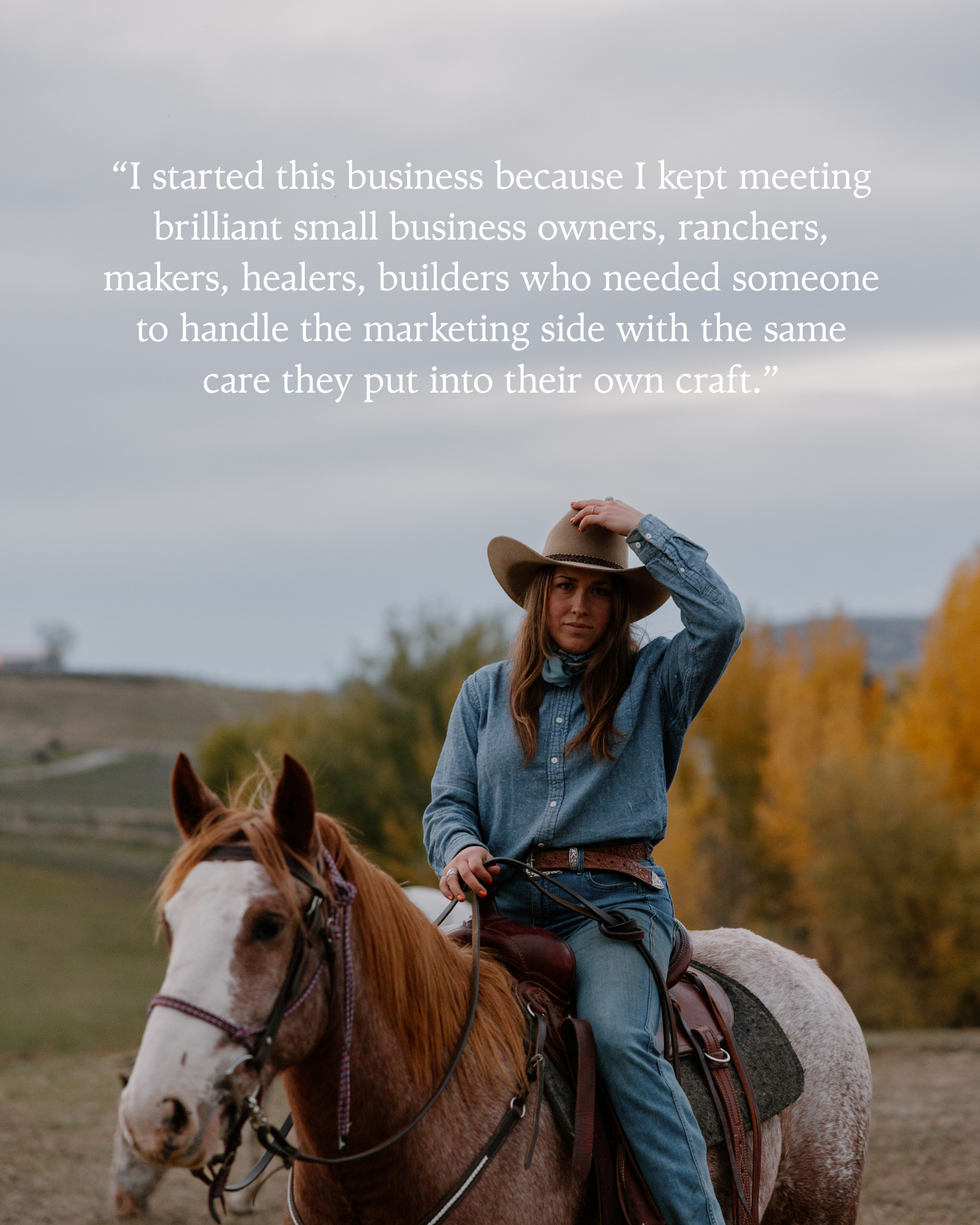
That's really the whole idea behind Free Rein Creative. I started this business because I kept meeting brilliant small business owners, ranchers, makers, healers, builders who needed someone to handle the marketing side with the same care they put into their own craft. Not a faceless agency. A partner who actually picks up the phone.
Marketing, done right, should feel less like a chore you're behind on and more like freedom; the freedom to do what you're best at while your business keeps growing in the background.
If you've been putting this off, consider this your sign to stop waiting for "someday." Let's figure out what your business actually needs, no overwhelm required.
Ready to talk it through? Reach out for a free quote — I'd love to hear what you're building.
